
Why Exchanging Information After a Car Accident Is So Important?
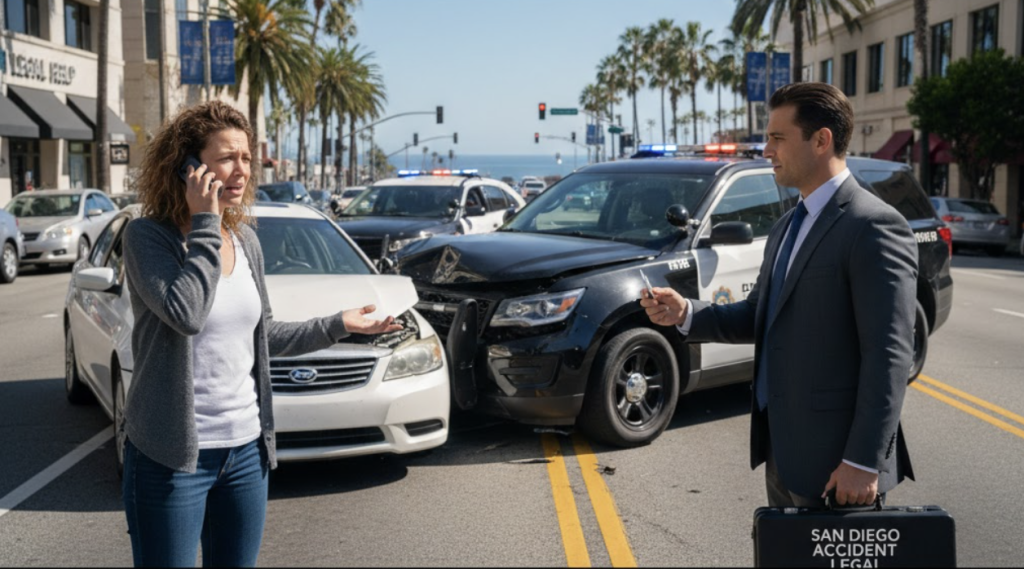
A car accident is one of those moments where time slows down and speeds up at the same time. You’re shaken, your hands are unsteady, and the last thing you want to do is stand on the side of the road making small talk with a stranger. We get it. But the few minutes you spend exchanging information at the scene can decide whether your medical bills get paid or whether you’re left holding them yourself. This guide walks you through exactly what to do, in plain language.
In the seconds after a crash, your heart is pounding. You check yourself for injuries, look at the damage to your car, and try to process what just happened. In this chaotic moment, it is tempting to just look at the other driver, agree “it’s not that bad,” and drive away without swapping details.
Or, perhaps the other driver is aggressive, shouting that they don’t have time for this, and tries to bully you into leaving.
At Tan Ngo Law Firm, we see this mistake destroy valid cases every week. Exchanging information is not just a “good idea,” it is a strict legal requirement in California. If you fail to do it correctly, you could be facing criminal charges or a denied insurance claim.
Car Accidents Happen More Often Than You Think
You are not alone in this. According to the National Highway Traffic Safety Administration (NHTSA), there are roughly 6 million car accidents every year in the United States, and NHTSA’s 2022 data reported more than 38,000 traffic fatalities and approximately 4.4 million injuries serious enough to require medical attention. That’s an enormous number of people who, just like you, weren’t expecting their day to end this way.
The sheer scale is part of why having a clear playbook for what to do at the scene matters so much. Most drivers will never think about this until it happens to them, and by then, the clock is already ticking.
The Law: It’s Not Optional (CVC § 20002 & § 20003)
California Vehicle Code is very clear. If you are involved in any accident that results in property damage or injury, you must stop and exchange specific information.
CVC § 20002 (Property Damage Only): Failure to stop and provide info is a misdemeanor “hit and run.” You could face up to 6 months in county jail and a $1,000 fine.
CVC § 20003 (Injury Accidents): If someone is hurt, the stakes are higher. You must provide your information to the other driver and any police officer on the scene. Failure to do so can be charged as a felony, punishable by state prison time.
The “Golden Five”: What You Must Capture
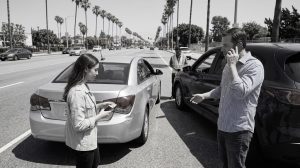
Many people just snap a photo of a license plate and think they are done. This is not enough. A license plate tells us who owns the car, but not necessarily who was driving it.
To build a winning case in 2026, you need to leave the scene with these five pieces of data:
- Driver’s Full Name & Current Address. Ask to see their physical driver’s license. The address on the license might be old, so ask them to confirm it.
- Driver’s License Number. This allows us to track their driving history and past citations.
- Vehicle Identification Number (VIN). This is the unique 17-character code that identifies the specific vehicle, usually visible on the dashboard at the base of the windshield or inside the driver’s door jamb. The VIN matters because it confirms the car isn’t stolen, and it’s tied directly to the insurance policy and registration. License plates can be swapped. A VIN cannot.
- Insurance Company & Policy Number. Without this, we don’t know who to bill for your medical treatment.
- Vehicle Owner’s Name. If the driver is borrowing a friend’s car (or driving a company vehicle), we need the owner’s info too, since they may also be liable.
Don’t Forget the Witnesses
This is one of the most overlooked steps at any accident scene, and it can quietly make or break a case. Independent witnesses, meaning people who don’t know you and don’t know the other driver, carry serious weight with insurance adjusters. Studies of disputed insurance claims have suggested that strong witness testimony can increase the likelihood of a favorable determination by as much as 40%.
At the scene, look around for anyone who saw what happened. Politely ask for:
- Their full name
- Phone number
- Email address (if they’re willing)
- A brief, voluntary description of what they saw, ideally in a quick voice memo on your phone
Witnesses move on with their day quickly. If you don’t get their info before they leave, they’re usually gone forever.
Photographic and Digital Evidence: Your Phone Is Your Best Friend
Your smartphone is the single most powerful evidence tool you have at the scene. Industry data from sources like the Insurance Information Institute suggests that strong photographic evidence can reduce claim disputes by roughly 35% and accelerate settlements by an average of 17 days.
Take photos and short videos of:
- Both vehicles from multiple angles, including close-ups of damage
- License plates of all vehicles involved
- The position of vehicles in the road before anything is moved (if safe)
- Skid marks, debris, broken glass, and fluid leaks
- Traffic signs, signals, and lane markings near the scene
- Road conditions (wet pavement, potholes, construction)
- Visible injuries on yourself or your passengers
- The other driver’s insurance card and license (with their permission)
- The scene from a wider angle showing the whole intersection or stretch of road
More is better. You can always delete photos later. You can’t go back and take ones you missed.
The 2026 Shift: Digital Evidence
Paper insurance cards are becoming rare. In 2026, most San Diego drivers carry their proof of insurance on their phones (Apple Wallet or Google Wallet).
The Trap: Do not just look at their phone screen.
The Fix: Ask them to text, email, or AirDrop the screenshot to you immediately. If they drive away and you forgot the policy number, getting it later is a nightmare.
Why Your Lawyer Needs This Information
You might think, “I have their license plate, isn’t that enough?” Unfortunately, no.
Phantom Defendants. If you only have a plate, the registered owner can simply say, “I wasn’t driving, and I don’t know who was.” Without a name or ID of the driver, the case stalls.
“Excluded” Drivers. Insurance policies often list specific people who are not covered to drive the car (like a teenager with a bad record). We need to know who was driving to determine if coverage applies.
Uninsured Motorist (UM) Claims. If we find out early that the other driver is uninsured, we can immediately open a claim with your insurance to get your medical bills paid.
How This Information Feeds Into Your Insurance Claim
Once you’ve gathered the Golden Five plus witness info and photos, here’s what actually happens with all of it:
- You report the accident to your own insurance company within 24 to 72 hours. Most policies require prompt notice. Stick to the facts. Don’t speculate about fault.
- Your insurer (or your attorney) opens a claim with the at-fault driver’s insurance company using the information you collected at the scene.
- The adjuster reviews the police report, photos, witness statements, and medical records to evaluate liability and damages.
- Negotiations begin. This is where having complete documentation pays off. A claim with strong evidence is much harder to lowball.
- If the at-fault driver turns out to be uninsured or underinsured, your own UM/UIM coverage may step in. None of that is possible without the information you gathered at the scene.
Every missing piece of information at the scene is leverage handed to the insurance company.
What If They Refuse to Exchange Info?
This is a scary scenario. If the other driver says, “I’m not giving you anything,” or tries to intimidate you:
- Do Not Argue. Do not put your safety at risk.
- Get the Plate. Take a photo of their rear license plate immediately.
- Get the Face. If safe, take a photo or video of the driver. This prevents them from later claiming “my car was stolen.”
- Call 911. Tell the dispatcher, “I have been in an accident and the other driver is refusing to exchange information and is acting aggressively.” This usually prompts a police response.
“I Hit a Parked Car and No One Is Around”
If you sideswipe a parked car in North Park or Downtown, you cannot just drive away. Under CVC § 20002, you must:
- Locate the owner, OR
- Leave a written note in a conspicuous place (under the wiper) with your name, address, and a brief explanation of what happened.
Take a photo of your note on the windshield as proof you left it.
Frequently Asked Questions
What information am I legally required to exchange after a car accident?
Under California Vehicle Code §§ 20002 and 20003, you must provide your name, current address, the registration number of the vehicle, and your driver’s license if requested. Best practice is to also exchange insurance information, the vehicle owner’s name (if different), and the VIN.
What happens if the other driver refuses to exchange information?
Stay safe and call 911. Take photos of the vehicle, license plate, and (if safe) the driver. A refusal to exchange information can itself constitute a hit and run under California law.
How does the information I collect at the scene affect my legal case?
Driver, vehicle, insurance, and witness information forms the evidentiary foundation for both your insurance claim and any personal injury lawsuit. Missing pieces create openings for the other side to deny or reduce your claim.
What are the penalties for leaving the scene of an accident without exchanging information?
Under CVC § 20002, property-damage-only hit and run is a misdemeanor punishable by up to 6 months in county jail and a $1,000 fine. Under CVC § 20003, leaving the scene of an injury accident can be charged as a felony with potential state prison time and license suspension.
How long do I have to report a car accident in California?
You generally must report an accident to the DMV within 10 days if it caused injury, death, or property damage exceeding $1,000 (DMV Form SR-1). Notifying your own insurance should usually happen within 24 to 72 hours of the crash.
Does contacting Tan Ngo Law Firm mean I have legal representation?
No. An attorney-client relationship is only formed once a written retainer agreement is signed. An initial conversation or consultation does not by itself create representation, but it does allow us to evaluate your case and explain your options.
Can I share accident details with Tan Ngo Law Firm before signing a retainer?
Yes. Initial consultations are confidential, and you can share what happened so we can assess whether we’re the right fit for your case. We’ll explain clearly what is and isn’t protected before any written agreement is signed.
Hurt in a San Diego Car Accident? Talk to Us Today.
The information you collect at the scene matters. So does what you do in the days that follow. If you’ve been in a crash and you’re not sure what to do next, the smartest move is to talk to a lawyer before the insurance company starts calling.
Tan Ngo Law Firm offers free, confidential consultations to San Diego car accident victims. We’ll listen to your story, explain your rights, and tell you honestly whether we can help. There’s no obligation, and you pay nothing unless we win your case.
📞 Call Tan Ngo Law Firm today for your free consultation.