Wage & Hour Disputes
When you go to work, you expect to be paid fairly and on time. That sounds simple enough, but wage and hour violations are among the most common employment law issues in California.
Employers cut corners in all kinds of ways, from not paying overtime to skipping meal and rest breaks, misclassifying employees as independent contractors, or simply not paying workers for all the hours they put in. California has strong wage and hour protections that go well beyond federal law, and employees who are shortchanged have the right to recover what they're owed.

Wage & Hour Disputes - FAQ
Disclaimer: The information provided in this article is for general informational and educational purposes only. It is not intended to constitute legal advice and does not create an attorney-client relationship. Statutes of limitations and legal rights can vary based on specific facts and circumstances. The information contained herein can change due to changes in the law. You should not rely on this information without consulting a qualified attorney about your particular situation.
What is the Wage and Hour Act?
The federal law that governs wages and hours is the Fair Labor Standards Act, or FLSA. Enacted in 1938, the FLSA established minimum wage, overtime pay, recordkeeping requirements, and child labor standards for workers in the private sector and in federal, state, and local governments.
Under the FLSA, non-exempt employees are entitled to at least the federal minimum wage for all hours worked and overtime pay at one and a half times their regular rate for any hours worked over 40 in a workweek.
California has its own set of wage and hour laws that provide even greater protection. The California Labor Code, together with the Industrial Welfare Commission wage orders, sets higher minimum wage rates, requires overtime pay after eight hours in a single day rather than just 40 hours in a week, mandates meal and rest breaks, and imposes strict penalties on employers who violate these rules.
For San Diego workers, this means California law almost always provides a better framework than federal law when it comes to wage and hour protections. If your employer is violating either set of rules, you have the right to file a claim and recover what you’re owed.
What happens if a job doesn't pay you for the hours you worked?
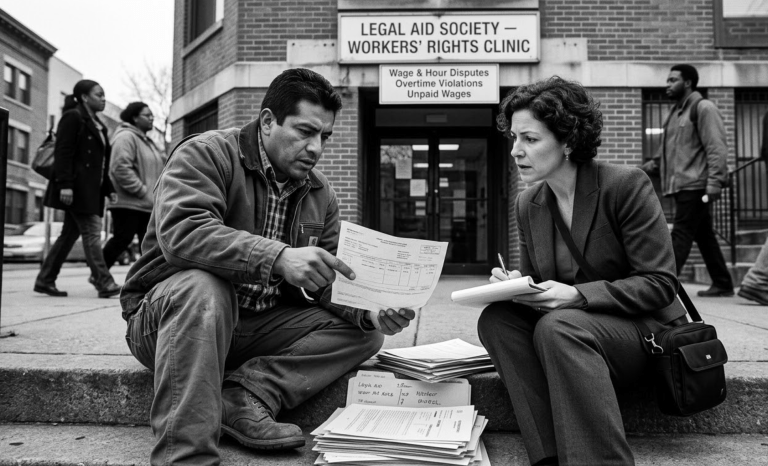
If your employer doesn’t pay you for hours you actually worked, that’s a wage theft violation, and California law takes it seriously.
Your first step should be to raise the issue with your employer in writing. Sometimes payroll errors happen, and a written request creates a record in case the problem isn’t resolved. If your employer ignores you or refuses to pay, you have several options.
You can file a wage claim with the California Division of Labor Standards Enforcement, also known as the Labor Commissioner’s Office. This is a free process, and you don’t need an attorney to file, although having one can help. The Labor Commissioner will investigate your claim and, if it has merit, schedule a hearing where your employer will be required to respond.
You can also file a lawsuit in civil court. For smaller amounts, small claims court may be an option. For larger claims, you’ll want to work with an employment attorney.
California law provides serious penalties for wage theft. In addition to the unpaid wages, your employer may owe you waiting time penalties, interest, and additional statutory penalties. If the violation was willful, the penalties increase significantly.
Don’t assume the money is gone just because your employer didn’t pay you. California law is designed to make sure workers get every dollar they earned.
What are the three most important HR laws?
There’s no official list of the three most important HR laws, but in the context of California employment, three stand out for the impact they have on everyday workers.
The Fair Labor Standards Act (FLSA). This is the bedrock federal law governing minimum wage, overtime, and child labor. It applies to most employers and sets the baseline for wage and hour protections across the country.
The California Fair Employment and Housing Act (FEHA). This is California’s primary anti-discrimination law. It prohibits discrimination and harassment based on race, sex, age, disability, religion, national origin, sexual orientation, gender identity, and several other protected categories. It applies to employers with five or more employees.
The California Labor Code. While this is technically a collection of laws rather than a single statute, the California Labor Code governs nearly every aspect of the employer-employee relationship in the state, including wages, overtime, meal and rest breaks, final pay, pay stubs, and retaliation protections.
These three bodies of law touch almost every employment relationship in California, and most of the wage and hour disputes, discrimination claims, and workplace complaints that attorneys handle fall under one or more of them.
What is Section 7 of the Fair Labor Standards Act?
Section 7 of the FLSA is the provision that establishes overtime pay requirements for non-exempt employees.
Under Section 7, employers must pay non-exempt employees at least one and a half times their regular rate of pay for any hours worked in excess of 40 hours in a single workweek. The workweek is defined as a fixed, recurring period of 168 hours, or seven consecutive 24-hour periods.
This section is one of the most frequently litigated provisions of the FLSA because employers often try to avoid overtime obligations through misclassification, off-the-clock work, or improper calculation of the regular rate of pay.
California goes even further. Under state law, non-exempt employees are entitled to overtime after eight hours in a single workday, not just 40 in a week. Employees who work more than 12 hours in a day or more than eight hours on the seventh consecutive day of work in a workweek are entitled to double time.
If your employer is not paying you proper overtime, whether under federal or California law, you may be owed back wages, penalties, and interest.
What is the 7 minute rule for employees?
The 7-minute rule is an informal reference to a federal rounding practice. Under the FLSA, employers are allowed to round employee time to the nearest quarter hour, which is a 15-minute increment. Under this system, time worked between 1 and 7 minutes is rounded down, and time worked between 8 and 15 minutes is rounded up.
For example, if an employee clocks in at 8:07 a.m., the employer can round that to 8:00 a.m. If the employee clocks in at 8:08 a.m., the employer can round that to 8:15 a.m.
The key requirement is that the rounding policy must be neutral over time. It cannot consistently benefit the employer at the employee’s expense. If a rounding policy systematically shortchanges employees, it’s illegal.
California courts have historically allowed time rounding, but recent court decisions have moved away from it. In 2021, the California Supreme Court restricted rounding practices in the meal break context, and the trend in California is toward requiring employers to pay for all actual time worked. If you suspect your employer’s rounding policy is costing you money, it’s worth having an attorney review the specifics.
Is it illegal for your workplace to pay you late?
Yes. Under California law, employers must pay employees on regularly scheduled paydays, and those paydays must meet specific timing requirements.
California Labor Code Section 204 requires that most employees be paid at least twice per month on designated paydays. Overtime wages must be paid no later than the next regular payday following the period in which the overtime was earned.
When an employee is fired, California Labor Code Section 201 requires the employer to pay all wages owed immediately at the time of termination. If an employee quits with at least 72 hours’ notice, they must be paid on their last day. If they quit without notice, the employer has 72 hours to pay.
Late payment isn’t just an inconvenience. It’s a violation of the law. Employees who aren’t paid on time can recover waiting time penalties under California Labor Code Section 203. The penalty is equal to one day’s wages for each day the payment is late, up to a maximum of 30 days.
If your employer regularly pays you late or has failed to pay you on time after a separation, you have the right to file a claim and recover penalties on top of the wages owed.
What happens if I don't get paid in time?
If your employer doesn’t pay you on time, California law gives you the right to recover not just the wages owed but additional penalties as well.
As mentioned above, waiting time penalties under Labor Code Section 203 can add up to 30 days of additional pay if your employer doesn’t pay you promptly after your employment ends. For an employee earning $200 per day, that could mean up to $6,000 in penalties on top of the unpaid wages.
For ongoing employment, late payment can also trigger penalties under the Private Attorneys General Act, or PAGA. This law allows employees to file claims on behalf of themselves and other employees for labor code violations, including late payment of wages. PAGA penalties can be significant, especially in cases involving multiple employees.
You can file a wage claim with the Labor Commissioner or pursue a lawsuit in court. If the violation is widespread and affects other workers at your company, a class action or PAGA claim may be appropriate.
Don’t just accept late pay as normal. If it’s happening to you, it’s likely happening to your coworkers too, and the law is set up to address it.
What can I do if my work is not paying me?
If your employer isn’t paying you, take the following steps.
Put your request for payment in writing. Send an email or a letter to your employer or HR department asking for the wages you’re owed. Be specific about the pay period, the hours worked, and the amount due. This creates a paper trail.
Keep your own records. If you don’t trust your employer’s timekeeping, keep a personal log of the hours you work, including start times, end times, and any breaks you took or missed. Save any pay stubs, schedules, or communications related to your pay.
File a wage claim with the California Labor Commissioner. This is a straightforward process that doesn’t require an attorney, though having one can be helpful. The Labor Commissioner will investigate and, if appropriate, hold a hearing to determine what you’re owed.
Consult with an employment attorney. If the amount owed is significant, or if the issue affects multiple employees, an attorney can advise you on whether a lawsuit or a PAGA claim makes more sense than an administrative complaint.
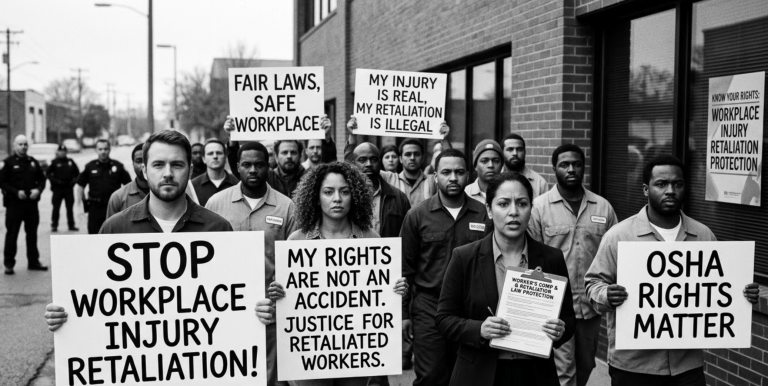
Do not let fear of retaliation stop you. California law prohibits employers from retaliating against employees who file wage claims or complaints about unpaid wages. If your employer retaliates against you for asserting your rights, that’s a separate violation with its own penalties.
What is the 4 hour rule?
The 4-hour rule in California is known as “reporting time pay.” Under the Industrial Welfare Commission wage orders, if an employee is scheduled to work or shows up for a shift and is sent home early or given less work than expected, the employer must pay them for at least half of their scheduled shift, with a minimum of two hours and a maximum of four hours at their regular rate of pay.
For example, if you’re scheduled for an eight-hour shift and your employer sends you home after two hours, they still owe you four hours of pay. If you’re scheduled for a four-hour shift and get sent home after one hour, you’re owed two hours of pay.
This rule exists to protect workers who rely on a full day’s wages and shouldn’t lose income just because their employer overscheduled or mismanaged the workload.
There are some exceptions. Reporting time pay doesn’t apply if operations can’t begin due to threats to employees or property, if public utilities fail, or if a natural disaster or other act of God prevents work. It also doesn’t apply if the employee is on an on-call arrangement and isn’t required to report to a specific location.
If your employer is regularly sending you home early without proper reporting time pay, that’s a violation you can address through a wage claim or a lawsuit.
What is wage and hour litigation?
Wage and hour litigation refers to lawsuits filed by employees against employers for violations of wage and hour laws. These cases cover a wide range of issues, including unpaid wages, unpaid overtime, missed meal and rest breaks, minimum wage violations, failure to provide accurate pay stubs, misclassification of employees as exempt or as independent contractors, and failure to pay final wages on time.
These cases can be filed individually or as class actions when the same violation affects multiple employees at the same company. PAGA claims, which allow individual employees to act as a “private attorney general” on behalf of the state, are also a common tool in California wage and hour litigation.
Wage and hour cases are among the most frequently filed employment claims in California, and they can result in significant recoveries. Employers who violate these laws face liability for the unpaid wages plus interest, statutory penalties, waiting time penalties, attorney’s fees, and in some cases, PAGA penalties.
If you believe your employer is violating wage and hour laws, an attorney can help you assess the situation and decide on the best strategy.
What can I do if my employer is not giving me hours?
If your employer has drastically reduced your hours without explanation, you may have a legal claim depending on the circumstances.
If the reduction in hours came after you filed a complaint, reported illegal activity, requested accommodations, took medical leave, or engaged in any other protected activity, it could be retaliation. Cutting someone’s hours is a recognized form of adverse action under both federal and California anti-retaliation laws.
If the reduction in hours appears to be connected to a protected characteristic like your race, gender, age, disability, or pregnancy, it could be discrimination.
If your employer is reducing your hours to avoid providing benefits or to push you toward quitting, that might support a constructive discharge claim, depending on how severe and prolonged the reduction is.
Even if the reduction is not connected to a protected activity or characteristic, there may still be issues. If your employer guaranteed you a certain number of hours in an offer letter or employment agreement and then cut those hours, that could be a breach of contract.
What can I do if my job never pays me on time?
If your employer consistently pays you late, you have real legal options.
Start by documenting every instance of late payment. Note the scheduled payday, the date you actually received payment, and the amount. Keep copies of your pay stubs.
Raise the issue in writing with your employer or HR. A written request creates a record and puts your employer on notice that the late payments are not going unnoticed.
If the problem continues, file a wage claim with the California Labor Commissioner. Late payment of wages violates the California Labor Code, and the Labor Commissioner can order your employer to pay penalties.
You may also have a PAGA claim if the late payments affect other employees. PAGA claims allow you to pursue penalties on behalf of yourself and your coworkers, and they can put significant financial pressure on an employer to fix the problem.
If you’re no longer working for the employer and they paid your final wages late, you may be entitled to waiting time penalties of up to 30 days of additional pay.
Don’t brush off late paychecks as a minor inconvenience. Consistent late payment is a labor code violation, and the penalties exist to protect workers like you.
How much does a lawyer cost for wage and hour disputes?
Most wage and hour attorneys who represent employees work on contingency, meaning they take a percentage of the recovery and charge nothing upfront. The typical contingency fee is between 40% and 45%.
In California, wage and hour statutes often include provisions that allow the court to order the employer to pay the employee’s attorney’s fees. This makes wage and hour cases more accessible for workers because the financial risk of hiring an attorney is significantly reduced.
How does California overtime differ from federal law?
California requires overtime at 1.5 times pay after 8 hours in a day or 40 in a week, and double time after 12 hours in a day. Federal law only counts the 40-hour week, so California protections are stronger.
What are my meal and rest break rights in California?
California employees are generally entitled to a 30-minute meal break before the end of the fifth hour and a paid 10-minute rest break for every four hours worked. Missed breaks can entitle you to premium pay.
When must I receive my final paycheck in California?
If you are fired, your final wages are due immediately, and if you quit without notice, within 72 hours. Late final pay can trigger waiting time penalties of up to 30 days of wages under Labor Code section 203.
How long do I have to file a wage claim in California?
You generally have three years for most statutory wage claims, and up to four years under the unfair competition law. A San Diego wage and hour lawyer can confirm which applies to you.
Do you handle wage and hour cases across San Diego County?
Yes. We represent employees throughout San Diego, Chula Vista, and North County cities including Carlsbad and Escondido for unpaid wages, overtime, and break violations. Consultations are free.
Can I sue if I was misclassified as exempt or a contractor?
Yes. Many California workers are wrongly labeled exempt or independent contractors and are actually owed overtime and other protections under the state’s strict ABC test. We can evaluate your classification.