Pedestrian Injury Cases
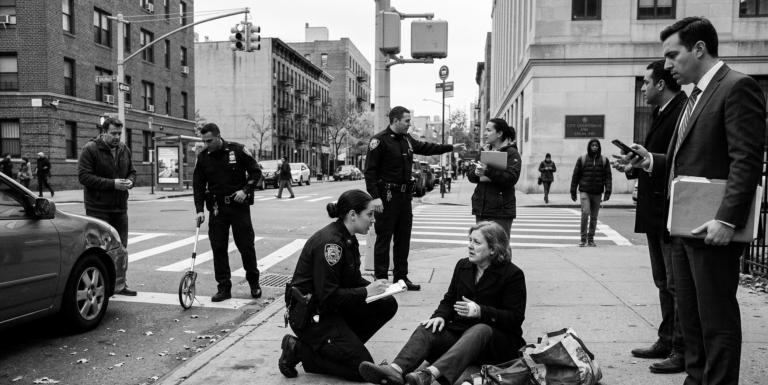
Pedestrian accidents are among the most dangerous types of traffic collisions. When a vehicle strikes someone on foot, the results can be devastating. Broken bones, head injuries, spinal damage, and internal bleeding are common, and fatal pedestrian accidents happen far too often in San Diego and across California.
Drivers have a legal duty to watch for pedestrians and yield the right of way in many situations, but distracted driving, speeding, and failure to stop at crosswalks continue to put walkers at risk. If you or a family member was hit by a vehicle while walking, California law gives you the right to pursue compensation from the driver or other responsible parties.

Pedestrian Injury Cases - FAQ
Disclaimer: The information provided in this article is for general informational and educational purposes only. It is not intended to constitute legal advice and does not create an attorney-client relationship. Statutes of limitations and legal rights can vary based on specific facts and circumstances. The information contained herein can change due to changes in the law. You should not rely on this information without consulting a qualified attorney about your particular situation.
What are the most common pedestrian injuries?
Pedestrian accidents frequently result in serious injuries because the human body has no protection against a moving vehicle. The most common injuries include the following.
Broken bones are extremely common, particularly fractures to the legs, hips, pelvis, arms, and ribs. The lower body tends to take the initial impact when a vehicle strikes a pedestrian, which is why leg and hip fractures are so prevalent.
Traumatic brain injuries range from mild concussions to severe brain damage. A pedestrian who is struck by a car may hit their head on the vehicle, the pavement, or both. Brain injuries can have lasting cognitive, emotional, and physical effects, and some victims never fully recover.
Spinal cord injuries can result in partial or complete paralysis. Even injuries that don’t cause paralysis can lead to chronic pain, limited mobility, and long-term disability.
Internal injuries, including damage to organs like the spleen, liver, kidneys, and lungs, are common in high-impact collisions. These injuries can be life-threatening and may not be immediately apparent, which is why getting medical attention right away after a pedestrian accident is critical.
Soft tissue injuries like sprains, strains, torn ligaments, and deep bruising are common even in lower-speed collisions. While these injuries are less severe than fractures or brain injuries, they can still cause significant pain and require weeks or months of treatment.
Road rash and skin lacerations occur when a pedestrian is dragged or slides across the pavement after being hit. Severe road rash can require skin grafts and leave permanent scars.
Psychological injuries are also significant. Many pedestrian accident victims develop post-traumatic stress disorder, anxiety, depression, or a lasting fear of crossing streets or walking near traffic. These emotional injuries are compensable under California law.
What are 90% of accidents caused by?
The widely cited statistic that 90% of traffic accidents are caused by human error comes from studies conducted by the National Highway Traffic Safety Administration, or NHTSA. The term “human error” covers a broad range of driver behaviors that contribute to collisions.
Distracted driving is one of the leading causes. Texting, talking on the phone, adjusting the GPS, eating, or simply not paying attention to the road are all forms of distraction that put pedestrians at serious risk.
Speeding is another major factor. Drivers who exceed the speed limit or drive too fast for conditions have less time to react to pedestrians and less ability to stop in time. The severity of pedestrian injuries increases dramatically with the speed of the vehicle at impact.
Impaired driving, including driving under the influence of alcohol or drugs, significantly increases the likelihood of an accident. Impaired drivers have reduced reaction times, impaired judgment, and difficulty maintaining control of their vehicles.
Failure to yield the right of way accounts for a large number of pedestrian accidents. Drivers who don’t stop at crosswalks, roll through stop signs, or make turns without checking for pedestrians are a constant danger.
Other common human errors include running red lights, aggressive driving, fatigue, and failing to check mirrors or blind spots before turning or backing up.
While road design, weather conditions, and vehicle defects can also contribute to accidents, the overwhelming majority of collisions come down to preventable driver mistakes.
What is the crime for hitting a pedestrian?
Hitting a pedestrian can result in criminal charges depending on the circumstances. The specific charge depends on the driver’s behavior and the severity of the injuries.
If the driver was negligent but not reckless, and the pedestrian suffered injuries, the driver may face a misdemeanor charge for reckless driving or failure to yield. California Vehicle Code Section 21950 requires drivers to yield the right of way to pedestrians in crosswalks, and violating this statute can result in a traffic citation or misdemeanor charge.
If the driver was under the influence of alcohol or drugs, they can be charged with DUI causing injury under California Vehicle Code Section 23153, the driver can be charged with either a misdemeanor or felony depending on the severity of the injuries and the driver’s history.
If the driver was acting with gross negligence and the pedestrian was killed, the driver may face vehicular manslaughter charges under California Penal Code Section 192(c). If the driver was intoxicated, the charge can be elevated to gross vehicular manslaughter while intoxicated under Penal Code Section 191.5.
Hit and run is a separate criminal offense. Under California Vehicle Code Section 20001, leaving the scene of an accident that resulted in injury or death is a felony. Even if the initial collision was accidental, fleeing the scene adds a serious criminal charge.
Criminal charges and civil claims are separate proceedings. A driver can face criminal prosecution and a civil lawsuit at the same time. The criminal case is handled by the district attorney, while the civil case is pursued by the injured pedestrian or their family to recover compensation.
Do pedestrians always legally have the right of way?
No. While drivers have significant obligations to watch for and yield to pedestrians, pedestrians do not have an unlimited right of way under California law.
Pedestrians have the right of way in marked crosswalks and at unmarked crosswalks at intersections. Drivers must yield to pedestrians who are in or entering a crosswalk, and they cannot pass another vehicle that has stopped for a pedestrian at a crosswalk.
However, pedestrians also have legal obligations. Under California Vehicle Code Section 21954, a pedestrian who crosses a road outside of a crosswalk must yield the right of way to vehicles. This is commonly referred to as jaywalking, although the term isn’t used in the vehicle code itself.
Pedestrians are also prohibited from suddenly leaving a curb and walking or running into the path of a vehicle that is close enough to constitute an immediate hazard. Even at a crosswalk, a pedestrian cannot step into traffic if a vehicle doesn’t have time to stop safely.
That said, even when a pedestrian is partially at fault, they can still recover compensation under California’s comparative negligence system. Their recovery will be reduced by their percentage of fault, but they won’t be completely barred from making a claim.
In practice, drivers are held to a high standard of care when it comes to pedestrians because of the severe consequences of a vehicle-pedestrian collision. Courts and juries tend to expect drivers to be vigilant, especially in areas where pedestrians are likely to be present.
Where do pedestrians get hit the most?
Pedestrian accidents occur most frequently in certain types of locations, and understanding these patterns can be helpful both for safety and for building a legal case.
Intersections are the most common location for pedestrian collisions. Both signalized and unsignalized intersections are dangerous for pedestrians, particularly when drivers fail to check for foot traffic before making turns. Right turns on red and left turns across oncoming traffic are especially hazardous because the driver’s attention is often focused on vehicle traffic rather than pedestrians in the crosswalk.
Mid-block crossings are another high-risk area. Pedestrians who cross the street outside of a crosswalk are more vulnerable because drivers don’t expect them and may not see them in time to stop.
Parking lots and driveways are surprisingly dangerous. Vehicles backing out of spaces or pulling out of driveways often fail to check for pedestrians walking behind or alongside them. Low speeds in parking lots can still cause serious injuries, particularly to children and older adults.
Urban areas with high traffic volume and high pedestrian activity see more accidents than suburban or rural areas. In San Diego, areas near shopping centers, transit stops, schools, and entertainment districts tend to have higher rates of pedestrian collisions.
Roads without sidewalks force pedestrians to walk in or alongside the road, which significantly increases the risk of being struck. This is more common in suburban and rural areas where pedestrian infrastructure is limited.
Dark conditions contribute to a disproportionate number of pedestrian accidents. Many fatal pedestrian collisions occur at night, when visibility is reduced and drivers are less likely to see someone on foot.
What are the rules for a pedestrian?
California law imposes several rules on pedestrians to help keep them safe and ensure the orderly flow of traffic.
Pedestrians must obey traffic signals and pedestrian control devices. When a crosswalk signal shows “Don’t Walk” or a red hand, pedestrians are required to wait before entering the roadway. If the signal changes while a pedestrian is already crossing, they must finish crossing as quickly as safely possible.
Pedestrians must use crosswalks when they are available at a signalized intersection. Crossing outside of a crosswalk at a signalized intersection is a violation of the vehicle code.
When crossing outside of a crosswalk, pedestrians must yield the right of way to vehicles. They cannot suddenly step into traffic in a way that creates an immediate hazard.
Pedestrians must walk on the sidewalk when one is available. If there is no sidewalk, they should walk on the left side of the road facing oncoming traffic so they can see approaching vehicles.
Pedestrians are prohibited from walking on freeways and certain controlled-access highways where pedestrian access is restricted.
While pedestrians have rules to follow, the consequences of a driver failing to exercise care around pedestrians are far more severe than the consequences of a pedestrian violating a traffic rule. Courts recognize this imbalance, and drivers are generally held to a higher standard of care.
Do drivers have to give way to pedestrians?
Yes, in many situations. California law places clear obligations on drivers to yield to pedestrians.
Drivers must yield the right of way to pedestrians in any marked crosswalk and at any unmarked crosswalk at an intersection. This applies whether or not the intersection is signalized. If a pedestrian is in or entering the crosswalk, the driver must stop and wait for them to cross.
Drivers must also exercise due care around pedestrians at all times, regardless of who has the right of way. California Vehicle Code Section 21954(b) states that even when a pedestrian is crossing outside of a crosswalk, the driver is not relieved of the duty to exercise due care for the pedestrian’s safety.
When making a right turn on red, drivers must stop completely and check for pedestrians before proceeding. The same applies when making a left turn at a green light. Pedestrians in the crosswalk have priority over turning vehicles.
Drivers must stop for a pedestrian in a crosswalk even if the pedestrian is on the other half of the road. California law requires drivers to remain stopped until the pedestrian has cleared their lane and one adjacent lane.
In school zones, drivers must be especially cautious and obey reduced speed limits. Crossing guards have the authority to stop traffic for pedestrians, and drivers must comply.
The bottom line is that drivers bear the greater responsibility when it comes to pedestrian safety. A driver who fails to yield to a pedestrian and causes an accident will typically face liability for the resulting injuries.
Do pedestrians have to walk with or against traffic?
California law addresses this question directly. When there is no sidewalk available, pedestrians should walk on the left side of the road, facing oncoming traffic. This rule is found in California Vehicle Code Section 21956.
Walking against traffic allows pedestrians to see approaching vehicles and react if a car is heading toward them. This is significantly safer than walking with traffic, where vehicles approach from behind and the pedestrian has no visual warning.
If a sidewalk is available, pedestrians are required to use it. Walking in the road when a sidewalk is accessible is technically a violation of the vehicle code, though it’s rarely enforced unless it creates a safety hazard.
For pedestrians walking at night, visibility is a major concern regardless of which direction they’re walking. Wearing reflective clothing or carrying a light can reduce the risk of being struck. While California doesn’t specifically require pedestrians to wear reflective gear, being visible to drivers is one of the most effective things a pedestrian can do to stay safe.
If a pedestrian is hit while walking with traffic rather than against it, that fact may come up in the liability analysis. Under California’s comparative negligence system, the pedestrian’s failure to follow the rules of the road could be considered a contributing factor, which would reduce their recovery by their percentage of fault. But it wouldn’t eliminate their claim entirely if the driver was also negligent.
How long do I have to file a pedestrian accident claim in California?
You generally have two years from the date you were hit to file a personal injury lawsuit in California. If a government vehicle or dangerous crosswalk maintained by a public entity was involved, a six-month claim deadline may apply.
Do you handle pedestrian accident cases across San Diego County?
Yes. We represent injured pedestrians throughout the county, including downtown San Diego, Chula Vista, Oceanside, Escondido, and Carlsbad. Busy intersections and parking lots across the region see frequent pedestrian crashes.
What are the crosswalk right-of-way rules in California?
Under the California Vehicle Code, drivers must yield to pedestrians in marked and many unmarked crosswalks, and must exercise care to avoid hitting anyone on foot. A driver who fails to yield is typically at fault.
Toggles TitleDo pedestrians always have the right of way in California?
Not always. Pedestrians also have duties, such as not suddenly leaving a curb into traffic, but drivers still must use reasonable care at all times. Even if you were jaywalking, comparative negligence means you may still recover a reduced amount.
Can I recover if I was crossing outside a crosswalk?
Possibly. California’s pure comparative negligence rule means crossing outside a crosswalk reduces but does not necessarily eliminate your recovery, especially if the driver was speeding or distracted. We evaluate the full picture.
What if I was hit in a store or mall parking lot in San Diego?
Parking lots are common pedestrian-crash sites, and drivers must watch for people on foot. The driver, and sometimes the property owner for poor design or visibility, may be liable. We handle these San Diego claims.
What if a city bus or government vehicle hit me?
Claims involving a transit bus or government vehicle in San Diego follow special rules, including a six-month deadline to file a government claim. These cases are time sensitive, so contact us right away.
What should I do after being hit as a pedestrian?
Call 911, get medical care even if injuries seem minor, and if you can, photograph the scene and collect driver and witness details. Avoid giving the driver’s insurer a statement before speaking with an attorney.
How much is a pedestrian accident claim worth in San Diego?
Pedestrian injuries are often severe, so value reflects medical costs, lost income, long-term care, and pain and suffering. We evaluate your specific San Diego case before estimating a range.
What if the driver who hit me fled the scene?
In a hit-and-run, your uninsured motorist coverage may apply, and video, witnesses, and the police report can help identify the driver. Act quickly so evidence can be preserved.
How much does a pedestrian accident lawyer cost?
We handle these cases on contingency, so there is no upfront cost and you pay only if we recover for you. Injured pedestrians across San Diego County can get help without paying out of pocket.