Bicycle Accident Lawyer Near You
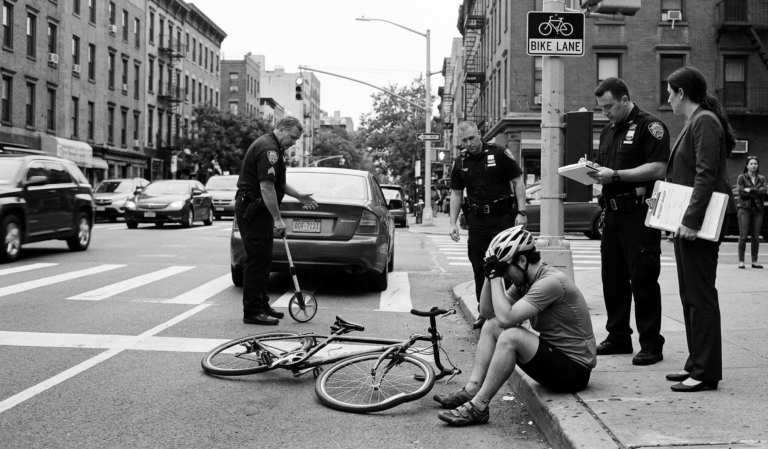
Cycling is a popular mode of transportation and recreation in San Diego, but riding a bicycle on streets shared with cars, trucks, and buses comes with real risks. When a motor vehicle collides with a cyclist, the injuries are often severe. Cyclists have minimal protection, and even a low-speed impact can cause broken bones, head trauma, spinal injuries, or worse.
California law treats bicycles as vehicles, which means cyclists have the same rights and responsibilities as drivers on the road. When a motorist's negligence causes a bicycle accident, the injured cyclist has the right to pursue full compensation for their injuries and losses.

Bicycle Accident - FAQ
Disclaimer: The information provided in this article is for general informational and educational purposes only. It is not intended to constitute legal advice and does not create an attorney-client relationship. Statutes of limitations and legal rights can vary based on specific facts and circumstances. The information contained herein can change due to changes in the law. You should not rely on this information without consulting a qualified attorney about your particular situation.
How much compensation for a cycling accident?
The compensation available in a cycling accident case depends on the severity of the injuries, the cost of medical treatment, lost income, and the overall impact on the cyclist’s life.
We have seen severe or catastrophic injuries, including traumatic brain injuries, spinal cord damage, amputations, or permanent disability, resulting in compensation from $500,000 to well over $1 million. We have also seen more mild injuries resolving for far less. Every case is unique and must be evaluated based on its specific facts and circumstances.
Economic damages cover medical bills, future medical care, lost wages, loss of earning capacity, bicycle replacement, and other out-of-pocket expenses. Non-economic damages compensate for pain and suffering, emotional distress, loss of enjoyment of life, and scarring or disfigurement. In cases where the driver’s conduct was especially reckless, such as texting while driving or driving under the influence, punitive damages may also be available.
The at-fault driver’s insurance coverage often sets a practical limit on the recovery. If the driver carries only California’s minimum liability coverage of $30,000 per person, that may cap what’s available from their policy. In those situations, the cyclist’s own uninsured/underinsured motorist coverage can fill the gap.
Is it worth getting a lawyer after a bicycle accident?
For any bicycle accident involving more than very minor injuries, yes. Bicycle accident cases can be surprisingly complex, and having legal representation makes a real difference in the outcome.
One of the biggest challenges cyclists face is the tendency for insurance companies and even police officers to assign partial blame to the cyclist. Adjusters may argue that the cyclist was riding too far from the curb, failed to signal, ran a stop sign, or was somehow responsible for the collision. An experienced attorney knows how to push back against these arguments and build a case that accurately reflects what happened.
Bicycle injuries also tend to be more serious relative to the speed of impact. Even a collision at 20 or 25 miles per hour can cause fractures, head injuries, and internal damage. Calculating the full value of these injuries requires accounting for future medical treatment, rehabilitation, lost earning capacity, and the long-term impact on the cyclist’s quality of life. Insurance companies routinely undervalue these claims, and without an attorney, you’re likely to settle for less than your case is worth.
Most bicycle accident attorneys work on contingency, so the financial risk is minimal. You pay nothing unless you recover compensation.
Can you sue someone if they hit you with a bike?
Yes. If another person’s negligence caused a bicycle accident that injured you, you have the right to file a personal injury claim against them.
The most common scenario is a motor vehicle driver striking a cyclist. In these cases, you would file a claim against the driver’s auto insurance and, if necessary, pursue a lawsuit against the driver personally. The claim process works the same as any other vehicle collision case.
You can also pursue a claim against a cyclist if you were a pedestrian hit by someone riding a bike. Cyclists are required to follow traffic laws, and a cyclist who runs a red light, rides on the sidewalk in a prohibited area, or otherwise operates their bicycle negligently can be held liable for injuries they cause.
In some cases, liability may extend beyond the driver or cyclist who hit you. If a dangerous road condition contributed to the accident, the city or county responsible for maintaining the road could be liable. If a defective bicycle part caused or contributed to the crash, the manufacturer may share responsibility.
California’s comparative negligence system means that even if you were partially at fault, you can still recover compensation. Your recovery is reduced by your percentage of fault, but you’re not barred from making a claim.
Who is at fault if you hit a cyclist?
Fault in a bicycle accident is determined by looking at the specific facts and circumstances of the collision. There is no automatic rule that says the driver is always at fault, though drivers do bear a significant responsibility to watch for cyclists and share the road safely.
In many bicycle accidents, the driver is at fault. Common driver errors that cause bicycle collisions include failing to check for cyclists before turning, opening a car door into a bike lane without looking, passing a cyclist too closely, running a stop sign or red light, driving distracted, and failing to yield when required.
California Vehicle Code Section 21760, known as the Three Feet for Safety Act, requires drivers to maintain at least three feet of clearance when passing a cyclist. Violating this law and causing a collision is strong evidence of driver fault.
However, cyclists can also be at fault or share fault in some situations. Riding against traffic, running stop signs, failing to use lights at night, swerving unpredictably, or riding under the influence can all contribute to an accident. If the cyclist’s actions contributed to the collision, their recovery would be reduced by their share of fault under California’s comparative negligence system.
In some cases, both the driver and the cyclist share responsibility. The fault is then apportioned based on the evidence, and each party bears their percentage of the liability.
How much money can I get from a bike accident settlement?
The settlement amount in a bicycle accident case depends on the injuries, the financial losses, the impact on your daily life, and the strength of the liability evidence.
For minor injuries with a quick recovery, we have seen settlements typically range from $10,000 to $40,000. Moderate injuries involving fractures, ligament tears, or soft tissue damage that requires extended treatment commonly settle between $50,000 and $200,000. Serious injuries, including head trauma, spinal injuries, or injuries requiring multiple surgeries, can result in settlements from $200,000 to over $1 million. Every case is unique and must be evaluated based on its specific facts and circumstances.
Factors that increase the settlement include clear evidence of driver fault, significant medical expenses, documented lost wages, permanent scarring or disability, and strong evidence of pain and suffering. Factors that may decrease the settlement include shared fault by the cyclist, gaps in medical treatment, pre-existing conditions, and limited insurance coverage.
Bicycle accident settlements also need to account for future damages. If your injuries will require ongoing medical care, physical therapy, or adaptive equipment, those costs should be built into the settlement. An attorney can work with medical experts to project these future costs and make sure they’re included in your demand.
What to do if I hit a cyclist?
If you’re a driver who has hit a cyclist, the steps you take immediately after the accident matter both legally and practically.
Stop immediately. Leaving the scene of an accident involving injury is a felony under California law, regardless of who was at fault. Pull over safely and stay at the scene.
Call 911. Report the accident and request medical help for the cyclist. Even if the injuries appear minor, a medical evaluation is important because some injuries aren’t immediately apparent.
Provide your information. California law requires you to exchange your name, address, driver’s license number, vehicle registration, and insurance information with the other party.
Do not admit fault at the scene. You may feel responsible, but the full picture of what happened may be more complex than it appears in the moment. Stick to the facts when speaking with the police and the other party.
Document the scene. If you can do so without interfering with medical attention or the police investigation, take photos of the vehicles, the bicycle, the road conditions, traffic signals, and any visible injuries. Note the time, weather, and lighting conditions.
Contact your insurance company. Report the accident to your insurer, but be careful about giving detailed statements before speaking with an attorney, especially if the injuries are serious.
Consult with an attorney if the cyclist was seriously injured. Even if you believe you weren’t at fault, having legal representation can protect your interests and help you respond to any claims that are filed against you.
What are illegal things an employer cannot do?
If you’re a driver who has hit a cyclist, the steps you take immediately after the accident matter both legally and practically.
Stop immediately. Leaving the scene of an accident involving injury is a felony under California law, regardless of who was at fault. Pull over safely and stay at the scene.
Call 911. Report the accident and request medical help for the cyclist. Even if the injuries appear minor, a medical evaluation is important because some injuries aren’t immediately apparent.
Provide your information. California law requires you to exchange your name, address, driver’s license number, vehicle registration, and insurance information with the other party.
Do not admit fault at the scene. You may feel responsible, but the full picture of what happened may be more complex than it appears in the moment. Stick to the facts when speaking with the police and the other party.
Document the scene. If you can do so without interfering with medical attention or the police investigation, take photos of the vehicles, the bicycle, the road conditions, traffic signals, and any visible injuries. Note the time, weather, and lighting conditions.
Contact your insurance company. Report the accident to your insurer, but be careful about giving detailed statements before speaking with an attorney, especially if the injuries are serious.
Consult with an attorney if the cyclist was seriously injured. Even if you believe you weren’t at fault, having legal representation can protect your interests and help you respond to any claims that are filed against you.
How do insurers determine who was at fault?
Insurance companies determine fault by investigating the accident and evaluating the evidence. The process involves several steps.
The claims adjuster reviews the police report, which usually includes the officer’s observations, statements from both parties, witness accounts, and sometimes a preliminary determination of fault. While the police report isn’t the final word on liability, it carries significant weight.
The adjuster looks at the physical evidence, including vehicle damage, bicycle damage, skid marks, the point of impact, and the location of the accident relative to bike lanes, crosswalks, and traffic signals.
Witness statements are valuable because they provide independent accounts of what happened. The adjuster may contact witnesses listed in the police report or identified by either party.
Photos and video footage, including dashcam footage, surveillance cameras, and photos taken at the scene, help establish what happened and often resolve disputes about fault.
The adjuster applies California traffic laws to the facts. If the driver violated a traffic law, such as the Three Feet for Safety Act or a right-of-way statute, that violation creates a presumption of negligence. Similarly, if the cyclist violated a traffic law, that may contribute to a finding of shared fault.
In disputed cases, the insurance company may hire an accident reconstruction expert to analyze the evidence and provide an opinion on how the collision occurred and who was responsible.
It’s important to know that the other driver’s insurance company is not on your side. Their adjuster’s goal is to minimize the payout, which may include assigning you a greater share of fault than the evidence supports. Having your own attorney involved in the process helps ensure the fault determination is fair and accurate.
Can a cyclist claim on my insurance?
Yes. If you were driving a motor vehicle and caused an accident with a cyclist, the injured cyclist can file a claim against your auto liability insurance.
Your liability coverage pays for the cyclist’s medical expenses, lost wages, pain and suffering, and other damages, up to the limits of your policy. California requires all drivers to carry minimum liability coverage of $30,000 per person and $60,000 per accident for bodily injury. Many drivers carry higher limits, which provides more coverage in the event of a serious accident.
If the cyclist’s damages exceed your liability limits, they can pursue the excess amount from your personal assets, though this is less common in practice.
Your insurance company will assign a claims adjuster to investigate the accident, evaluate the cyclist’s claim, and negotiate a settlement. If the case goes to litigation, your insurance company will typically provide an attorney to defend you.
If you have umbrella insurance, that policy may provide additional coverage beyond your auto liability limits. This can be important in cases involving severe injuries where the damages far exceed standard policy limits.
It’s worth noting that your insurance premiums may increase after a claim is filed against your policy, particularly if you were found at fault. The impact on your premiums depends on your insurer, your driving history, and the severity of the claim.
How long do I have to file a bicycle accident claim in California?
You generally have two years from the date of the crash to file a personal injury lawsuit in California. If a government entity, such as a city that failed to maintain a bike lane, is involved, a six-month government claim deadline may apply. A San Diego bicycle accident lawyer can confirm your timeline.
Do you handle bicycle accident cases in Carlsbad and North County?
Yes. We represent injured cyclists across San Diego County, including Carlsbad, Encinitas, Oceanside, and coastal North County routes, as well as the city of San Diego. These areas see heavy cycling traffic and frequent car-versus-bike collisions.
What rights do cyclists have on California roads?
Under the California Vehicle Code, bicyclists generally have the same rights and duties as drivers, including the right to use a full lane when needed for safety. Drivers must give at least three feet when passing a cyclist under California’s Three Feet for Safety Act.
Who is at fault if a car hits me while I am cycling in San Diego?
Fault depends on who violated the rules of the road, such as a driver failing to yield, opening a door into the bike lane, or making an unsafe turn. California’s comparative negligence rule means you can still recover even if you were partly at fault, with your award reduced by your share.
What is a dooring accident and can I recover for it?
Dooring happens when someone opens a car door into a cyclist’s path, which California law specifically prohibits. The person who opened the door is typically liable, and we can pursue a claim for your injuries.
Are e-bikes and electric scooters covered if I crash in San Diego?
Yes. Injuries on e-bikes and shared scooters like Bird or Lime are handled under similar negligence principles, though e-bike class rules and helmet requirements can affect the case. We handle these growing claims across San Diego.
Do I have to wear a helmet to recover compensation in California?
California requires helmets only for riders under 18, and not wearing one as an adult does not bar a claim. An insurer may argue it contributed to head injuries, but we push back on that where the helmet had nothing to do with the crash.
What if the driver who hit me fled the scene?
Hit-and-run bicycle crashes are unfortunately common. Your uninsured motorist coverage may apply, and police reports, video, and witnesses can help identify the driver. Contact us quickly so evidence can be preserved.
How much is a bicycle accident claim worth in San Diego?
Value depends on your injuries, medical costs, lost income, bike and gear damage, and long-term effects, since cyclists often suffer serious harm. We evaluate the full picture before estimating a range for your San Diego claim.
What should I do right after a bike crash?
If you can, call police, get medical care, photograph the scene and your injuries, and collect driver and witness information. Preserve your damaged bike and gear, and avoid giving the driver’s insurer a statement before speaking with a bicycle accident attorney.
How much does a bicycle accident lawyer cost?
We handle bicycle cases on contingency, so there is no fee unless we recover for you. Injured cyclists across San Diego County can get representation with nothing out of pocket.
Is the consultation free for injured cyclists?
Yes. We offer free, no-obligation consultations to cyclists hurt anywhere from Carlsbad to downtown San Diego, and you pay nothing unless we win.