Retaliation & Whistleblower Claims
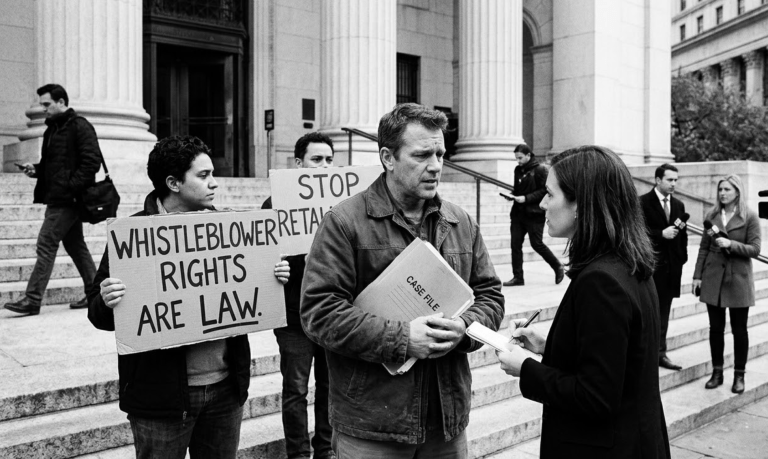
Speaking up about something wrong at work takes courage. Whether you reported illegal activity, unsafe conditions, wage theft, or discrimination, the law says your employer cannot punish you for doing the right thing. But retaliation happens all the time, and it doesn't always look like getting fired. It can be a demotion, a pay cut, a schedule change, or suddenly being excluded from projects you used to lead.
California has some of the strongest whistleblower and anti-retaliation laws in the country, and if your employer crossed the line, you have legal options.

Retaliation & Whistleblower Claims - FAQ
Disclaimer: The information provided in this article is for general informational and educational purposes only. It is not intended to constitute legal advice and does not create an attorney-client relationship. Statutes of limitations and legal rights can vary based on specific facts and circumstances. The information contained herein can change due to changes in the law. You should not rely on this information without consulting a qualified attorney about your particular situation.
What is the average settlement for whistleblower retaliation?
There’s no single number that applies to every case. Whistleblower retaliation settlements vary widely depending on the facts, the severity of the retaliation, how much income the employee lost, and whether the employer’s conduct was particularly egregious.
Cases involving long-term employees with high salaries, or cases where the employer’s behavior was especially bad, can settle for well over $1 million. On the lower end, a case with limited damages or weaker evidence might resolve for much less.
Several factors influence the settlement amount. Lost wages and benefits are usually the starting point. If you were fired, demoted, or had your hours cut, your attorney will calculate what you lost financially. Emotional distress damages can add to that number, especially if you can show the retaliation caused anxiety, depression, or other mental health effects. In cases where the employer acted with malice or fraud, punitive damages may also be on the table.
Can I sue for whistleblower retaliation?
Yes. Both federal and California law give employees the right to sue when their employer retaliates against them for whistleblowing.
Under California Labor Code Section 1102.5, it is illegal for an employer to retaliate against an employee who reports a violation of law to a government or law enforcement agency, or who refuses to participate in activity that would violate a state or federal statute. This is one of the broadest whistleblower protection statutes in the country.
There are also federal whistleblower protections under laws like the Sarbanes-Oxley Act for publicly traded companies, the False Claims Act for fraud against the government, and OSHA regulations for workplace safety complaints.
Before filing a lawsuit, you may need to file a complaint with a government agency first, depending on the type of claim. In some cases, you can go directly to court. An attorney can help you figure out which route applies to your situation and make sure you don’t miss any deadlines.
What is a whistleblower lawyer?
A whistleblower lawyer is an attorney who represents employees who have reported illegal or unethical conduct by their employer and faced retaliation as a result. These lawyers handle cases involving wrongful termination, demotion, pay cuts, harassment, and other forms of punishment that followed the employee’s decision to speak up.
Whistleblower attorneys understand the specific statutes that protect employees, how to file claims with the right agencies, and how to build a case that proves the connection between the protected activity and the employer’s retaliatory actions. They also know how to counter the most common employer defense, which is claiming the adverse action happened for a legitimate business reason unrelated to the whistleblowing.
What evidence do you need to prove retaliation?
Proving retaliation comes down to showing three things: you engaged in a protected activity, your employer took an adverse action against you, and there’s a connection between the two.
Protected activity includes things like reporting illegal conduct, filing a complaint about discrimination or safety violations, cooperating with an investigation, or refusing to do something illegal.
Adverse action is anything that would discourage a reasonable employee from speaking up. That can be termination, demotion, a pay cut, a transfer to a less desirable position, a negative performance review that doesn’t match your actual work, or even subtle things like being excluded from meetings.
The connection, sometimes called a “causal link,” is often the hardest part to prove. Timing is one of the strongest pieces of evidence. If you reported something and were fired two weeks later, that timing alone raises serious questions. Other helpful evidence includes emails, text messages, written warnings that started after your complaint, inconsistent explanations from your employer, and testimony from coworkers who witnessed what happened.
Keep records of everything. Save emails, take screenshots, write down conversations with dates and details. The stronger your paper trail, the stronger your case.
Is it worth suing for retaliation?
That depends on your situation, but in many cases, yes, it is.
Retaliation claims in California carry serious consequences for employers. If you win, you may be entitled to back pay, front pay, emotional distress damages, attorney’s fees, and in some cases, punitive damages. California courts have also ordered employers to reinstate employees who were wrongfully terminated in retaliation.
Beyond the financial recovery, filing a retaliation claim sends a message. It holds your employer accountable and can protect other employees from the same treatment. Many people who file retaliation claims say they wish they had done it sooner.
What are the 5 conditions of whistleblowing?
While the exact legal elements vary by statute, most whistleblower claims require the following conditions to be met:
The employee had a reasonable belief that a violation occurred. You don’t have to be right about the violation. What matters is whether a reasonable person in your position would have believed that illegal or unethical conduct was taking place.
The employee reported the conduct through a proper channel. This could be a report to a supervisor, a government agency, law enforcement, or an internal compliance department, depending on the law that applies.
The employer knew about the report. You need to show that the decision-makers who took action against you were aware of your complaint or report.
The employer took an adverse action. This means something happened to you at work that a reasonable employee would consider harmful, like losing your job, being demoted, or having your responsibilities stripped away.
There’s a causal connection between the report and the adverse action. The timing, the employer’s behavior, and any shifts in how you were treated after reporting all help establish this link.
If these conditions are present in your situation, you likely have the foundation for a whistleblower retaliation claim.
How long do whistleblower retaliation cases take?
There’s no standard timeline. Some cases resolve within a few months through settlement negotiations, while others take a year or more if they go to trial.
The early stages, which include filing a complaint with the appropriate agency, gathering evidence, and sending a demand letter, can take anywhere from a few weeks to several months. If the employer is willing to negotiate, a settlement can happen relatively quickly.
If the case goes to litigation, the discovery process alone, where both sides exchange evidence, take depositions, and prepare their arguments, can take six months to a year. After that, there may be mediation or a trial.
Several factors affect the timeline. The complexity of the case, how cooperative the employer is, the court’s schedule, and whether the case involves government agencies all play a role. While waiting can be frustrating, rushing a case can mean leaving money on the table. Your attorney’s job is to balance speed with getting you the best possible result.
How much money can you win from a retaliation lawsuit?
The amount depends on your specific damages, but retaliation awards in California can be substantial.
You can recover lost wages, both past and future, if the retaliation cost you income. Emotional distress damages compensate you for the psychological toll the retaliation took, things like anxiety, sleeplessness, depression, or damage to your personal relationships. If the employer acted with malice or oppression, punitive damages may be awarded on top of that.
California law also allows the court to order the employer to pay your attorney’s fees and litigation costs, which means the financial burden of pursuing the case doesn’t fall entirely on you.
Some California retaliation verdicts and settlements have reached well into the millions, particularly in cases where the employer’s conduct was extreme or where the employee held a high-paying position. Smaller cases with more limited damages might resolve in the tens of thousands.
How much would a defamation lawyer cost?
This question comes up in the retaliation context because employers sometimes damage an employee’s reputation after they speak up, which can overlap with defamation.
Defamation lawyers typically charge in one of three ways. Contingency arrangements, where the lawyer takes a percentage of the recovery, are common when defamation causes clear financial harm, like losing a job or being unable to find new employment. Hourly rates for defamation attorneys in California generally range from $300 to $600 per hour. Some attorneys offer flat fees for specific tasks like sending a cease-and-desist letter.
How to win a whistleblower case?
Winning a whistleblower case starts with preparation. Here’s what matters most.
Document everything from the start. Keep copies of any reports you made, emails, text messages, performance reviews, and anything else that shows a change in how you were treated after speaking up. The more detailed your records, the harder it is for your employer to rewrite the story.
Report through the right channels. Whether that’s a supervisor, HR, a government agency, or law enforcement, make sure your report is on the record. Verbal complaints are harder to prove than written ones.
Don’t give your employer an easy excuse. Show up on time, do your work, and follow company policies. Employers often try to justify retaliation by pointing to performance issues, so don’t give them ammunition.
Get a lawyer early. An experienced whistleblower attorney can advise you on how to protect yourself before the situation escalates. Waiting too long can mean lost evidence and missed deadlines.
Be patient. These cases take time, and the process can be stressful. But with strong evidence and the right legal team, whistleblower cases in California are very winnable.
What are the five consequences of whistleblowing?
Whistleblowing can lead to both positive and negative outcomes. Here are five consequences employees commonly experience:
Retaliation from the employer. This is the most common negative consequence. It can include termination, demotion, pay cuts, reassignment, exclusion from projects, or a hostile work environment.
Emotional and psychological stress. Whistleblowing often creates tension at work and can lead to anxiety, isolation, and depression, especially if coworkers or managers turn against you.
Legal proceedings. Filing a complaint or lawsuit takes time, energy, and emotional bandwidth. Even when the outcome is favorable, the process can be draining.
Financial recovery. On the positive side, successful whistleblower claims can result in significant compensation, including lost wages, emotional distress damages, and punitive damages.
Systemic change. Whistleblowers have been responsible for exposing fraud, safety violations, and discrimination that affected many people. Speaking up can lead to real policy changes and protect other workers from the same mistreatment.
The law exists to protect people who do the right thing. If you’ve faced consequences for whistleblowing, talk to an attorney about your options.
What makes a strong retaliation case?
A strong retaliation case has a few key ingredients.
Clear protected activity. You did something the law protects, like reporting illegal conduct, filing a discrimination complaint, or refusing to participate in unlawful behavior. The more documented your protected activity is, the better.
A close timeline. If your employer took action against you shortly after your complaint or report, that timing is powerful evidence. Courts take it seriously when an employee is fired, demoted, or disciplined within days or weeks of engaging in protected activity.
A shift in treatment. If your performance reviews were positive before you spoke up and suddenly turned negative afterward, that pattern tells a story. Same goes for being excluded from meetings, losing responsibilities, or getting written up for things that were never an issue before.
Inconsistent employer explanations. If your employer gives different reasons for why they took action against you, or if those reasons don’t hold up under scrutiny, that weakens their defense and strengthens your case.
No legitimate business justification. The employer needs to show they had a real, non-retaliatory reason for their actions. If they can’t, or if the reason they give doesn’t make sense, that’s a problem for them and an advantage for you.
How to win a retaliation case?
The strategy for winning a retaliation case is similar to winning a whistleblower case, but here are a few specific things that can make the difference.
Build your case before you need it. Start keeping records the moment you suspect retaliation. Save every email, every text, every written communication that shows a change in how you’re being treated.
Follow internal procedures. If your company has a process for reporting retaliation, use it. This creates a record and can also show that the employer failed to act when they had the chance.
Work with an attorney who knows employment law. Retaliation cases involve specific legal standards and burdens of proof that vary depending on the statute. An experienced lawyer knows how to frame the case, gather the right evidence, and anticipate the employer’s defenses.
Stay professional. As hard as it can be, keep doing your job well and avoid confrontations. The more composed and professional you remain, the harder it is for the employer to paint you as a problem employee.
Why is retaliation hard to prove?
Retaliation is hard to prove because employers rarely admit to it. They don’t send emails saying “we’re firing you because you filed a complaint.” Instead, they frame the adverse action as something else, a performance issue, a restructuring, a policy violation.
This is why circumstantial evidence matters so much. Courts look at timing, patterns, inconsistencies, and the overall context to determine whether retaliation was the real motivation. But building that picture takes effort. You need documentation, witnesses, and a lawyer who knows how to connect the dots.
Another challenge is that employers sometimes engage in subtle retaliation that’s hard to pin down. Being left off emails, excluded from meetings, or given undesirable assignments might not feel like a fireable offense on its own, but when it all adds up, it can create an environment designed to push you out.
What does California Labor Code 1102.5 protect?
California Labor Code section 1102.5 protects employees who report a reasonable belief of illegal activity to a government agency or to someone at work with authority to fix it. Employers cannot retaliate for that report.
How long do I have to file a whistleblower retaliation claim in California?
Deadlines vary by the law involved, and some whistleblower claims must be brought within three years while others are shorter. A San Diego employment lawyer can pinpoint your deadline before it passes.
Do you handle whistleblower cases across San Diego County?
Yes. We represent employees throughout San Diego, Chula Vista, and North County communities like Carlsbad and Oceanside who faced retaliation for reporting wrongdoing. Consultations are confidential.
Do I have to be right that the law was broken to be protected?
No. California protects employees who report a reasonable, good-faith belief of a violation, even if it later turns out no law was broken. The key is the reasonableness of your belief.
What damages can I recover in a California whistleblower case?
Recovery can include lost wages and benefits, emotional distress, and in serious cases penalties and punitive damages, plus attorney’s fees. We pursue the full value of your claim.