Motorcycle Accidents Lawyer Near You
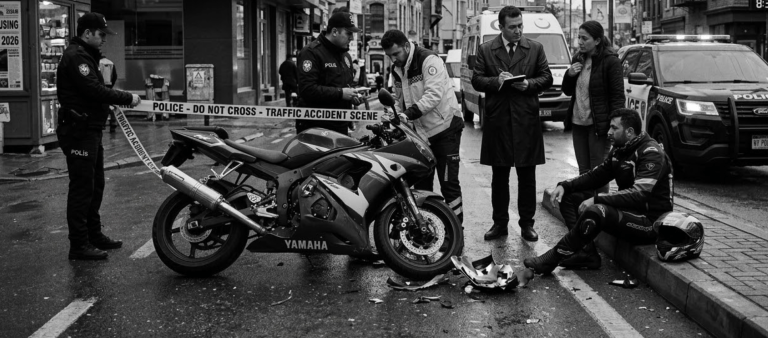
Motorcycle accidents tend to result in more serious injuries than typical car crashes. Riders don't have the protection of a steel frame, airbags, or seatbelts, which means even a moderate collision can lead to broken bones, road rash, spinal injuries, or worse.
California is one of the most popular states for motorcycling, but it's also one where riders face significant risks from distracted drivers, unsafe road conditions, and motorists who fail to share the road. When a motorcycle accident is caused by someone else's negligence, the injured rider has every right to pursue compensation under California law. These cases come with their own set of challenges, including bias against motorcyclists and disputes over lane splitting.

Motorcycle Accidents Collisions - FAQ
Disclaimer: The information provided in this article is for general informational and educational purposes only. It is not intended to constitute legal advice and does not create an attorney-client relationship. Statutes of limitations and legal rights can vary based on specific facts and circumstances. The information contained herein can change due to changes in the law. You should not rely on this information without consulting a qualified attorney about your particular situation.
Is it worth getting a lawyer after a motorcycle accident?
In almost every case involving injuries, yes. Motorcycle accident claims tend to be more complex and more aggressively contested than standard car accident claims, and having a lawyer can make a significant difference in the outcome.
One of the biggest challenges motorcycle riders face is bias. Insurance adjusters, jurors, and even police officers sometimes assume the motorcyclist was at fault or was riding recklessly, even when the evidence says otherwise. An experienced attorney knows how to counter that bias with facts, evidence, and expert testimony.
Motorcycle injuries also tend to be more severe, which means higher medical bills, longer recovery periods, and greater financial impact. Calculating the full value of a motorcycle accident claim requires accounting for future medical treatment, lost earning capacity, pain and suffering, and the long-term impact on your quality of life. Insurance companies routinely try to minimize these numbers, and without legal representation, you’re unlikely to receive fair compensation.
The financial risk of hiring an attorney is low because most motorcycle accident lawyers work on contingency. You pay nothing upfront, and the fee comes out of your recovery. Given what’s at stake, consulting with a lawyer after a motorcycle accident is one of the smartest decisions you can make.
How much are most motorcycle accident settlements?
There’s no standard settlement amount for motorcycle accidents because every case is different. The value depends on the severity of the injuries, the cost of medical treatment, lost income, the impact on daily life, and the strength of the liability evidence.
That said, motorcycle accident settlements tend to be higher than car accident settlements on average because the injuries are usually more serious. Minor motorcycle accidents involving soft tissue injuries or road rash may settle in the range of $10,000 to $50,000. Moderate injuries like broken bones, torn ligaments, or herniated discs that require surgery or extensive physical therapy often settle between $50,000 and $250,000. Severe injuries, including traumatic brain injuries, spinal cord damage, amputations, or permanent scarring, can result in settlements from $500,000 to well over $1 million. It is a broad range and it all depends on the specific facts and circumstances of the case.
Several factors affect the settlement amount beyond just the injuries. Whether the other driver was clearly at fault, whether you were wearing a helmet, whether lane splitting was involved, the quality of your medical documentation, and the available insurance coverage all play a role.
Insurance policy limits are also a practical consideration. If the at-fault driver only carries California’s minimum liability coverage of $30,000 per person, that may cap your recovery from their policy. In that situation, your own uninsured/underinsured motorist coverage becomes important.
How much compensation do you get for a motorcycle accident?
Compensation in a motorcycle accident case is based on your actual damages, and it falls into several categories.
Economic damages include your medical expenses, both past and future. This covers emergency room visits, surgeries, hospital stays, physical therapy, prescription medications, assistive devices, and any ongoing care you’ll need. Lost wages for time you missed from work and loss of future earning capacity if your injuries affect your ability to work are also included. Property damage to your motorcycle, riding gear, and personal belongings is recoverable as well.
Non-economic damages compensate you for pain and suffering, emotional distress, loss of enjoyment of life, scarring and disfigurement, and the overall impact the accident has had on your daily activities and relationships. These damages are harder to quantify but can make up a significant portion of the total recovery, especially in cases involving permanent injuries.
Punitive damages may be available if the at-fault party’s conduct was especially reckless or egregious, such as driving under the influence or engaging in road rage. These damages are meant to punish the defendant and are awarded on top of compensatory damages.
The total compensation depends on the specific facts of your case. An experienced motorcycle accident attorney can evaluate your damages and provide a realistic estimate of what your claim may be worth.
How long do motorcycle accident settlements take?
Motorcycle accident settlements generally take longer than typical car accident cases because the injuries are more serious and the claims are more complex.
The timeline usually breaks down into a few phases. The first phase is medical treatment and recovery. Most attorneys won’t pursue a settlement until you’ve reached maximum medical improvement, meaning your condition has stabilized and your doctors can give a clear picture of your prognosis. For serious motorcycle injuries, this phase alone can take several months to over a year.
Once treatment is complete or stabilized, your attorney will compile your medical records, calculate your total damages, and send a demand letter to the insurance company. The negotiation phase that follows can take anywhere from a few weeks to several months depending on how cooperative the insurance company is and how much is at stake.
If settlement negotiations don’t produce a fair offer, the case may move into litigation. Filing a lawsuit adds time, typically six months to a year or more, depending on the discovery process, court schedules, and whether the case goes to mediation or trial.
In total, motorcycle accident cases commonly take anywhere from six months to two years or longer to resolve. Cases with catastrophic injuries, disputed liability, or multiple defendants tend to take the longest.
Patience matters in these cases. Rushing to settle before your medical situation is clear can result in accepting far less than your case is actually worth.
What are signs of a good motorcycle settlement offer?
Not every settlement offer is worth accepting, and knowing what a good offer looks like can save you from leaving money on the table.
A good settlement offer covers all of your medical expenses, both the bills you’ve already incurred and the treatment you’ll need in the future. If the offer only covers your current bills and ignores future care, it’s not enough.
It accounts for your lost income, including wages you missed during recovery and any reduction in your future earning capacity if the injuries affect your ability to work at the same level as before.
It includes a meaningful amount for pain and suffering. Insurance companies often try to minimize this category, but non-economic damages are a legitimate and often substantial part of a motorcycle accident claim. A good offer recognizes the real impact the injuries have had on your life, your relationships, and your daily activities.
It arrives at a point when your medical treatment is complete or your condition has stabilized. Offers that come very early in the process, before you know the full extent of your injuries, are almost always lowball attempts to close the case cheaply.
It reflects the strength of the liability evidence. If the other driver was clearly at fault and there’s strong evidence to support that, the offer should reflect the risk the insurance company faces if the case goes to trial.
If an offer doesn’t check these boxes, it’s probably not a fair one. Your attorney’s job is to evaluate the offer against the full value of your case and advise you on whether to accept, counter, or proceed toward litigation.
What is the time limit for motorcycle accident claims?
In California, the statute of limitations for filing a personal injury lawsuit after a motorcycle accident is two years from the date of the accident. If you don’t file a lawsuit within that window, you lose your right to pursue compensation through the courts. There are exceptions to this rule that can lengthen or shorten the time frame.
If the claim is against a government entity, such as a city or county responsible for dangerous road conditions, the timeline is much shorter. You must file a government tort claim within six months of the accident. Missing this deadline can bar your claim entirely.
There are limited exceptions that can extend the statute of limitations, such as when the injured person is a minor or was mentally incapacitated at the time of the accident. But these exceptions are narrow, and relying on them without legal advice is risky.
The practical takeaway is simple: don’t wait. The sooner you consult with an attorney, the better your chances of preserving evidence, meeting deadlines, and building a strong case. Witnesses forget details over time, physical evidence disappears, and surveillance footage gets erased. Starting early gives your attorney the best chance to build a solid case on your behalf.
How long do I have to file a motorcycle accident claim in California?
You generally have two years from the crash to file a personal injury lawsuit in California, and three years for property damage. A government vehicle or hazard may shorten that to a six-month claim deadline. A San Diego motorcycle accident lawyer can confirm yours.
Do you handle motorcycle accident cases in North County San Diego?
Yes. We represent injured riders across San Diego County, including Escondido, Vista, Oceanside, and Carlsbad, as well as the city of San Diego. Many serious motorcycle crashes happen on the region’s freeways and canyon roads.
Is lane splitting legal in California, and does it affect my claim?
California is the only state that expressly allows lane splitting when done safely. Doing it lawfully does not automatically make you at fault, though insurers often try to blame the rider. We counter that bias with the facts of the crash.
Does not wearing a helmet hurt my motorcycle case in California?
California requires all riders to wear a DOT-compliant helmet. Riding without one can be used to reduce damages for head injuries, but it does not bar a claim for other injuries, and we work to limit any reduction.
Why do insurers treat motorcycle riders unfairly?
Adjusters and juries sometimes assume riders are reckless, which can lead to lowball offers. We push back on this bias by documenting the other driver’s negligence and presenting the evidence clearly.
What are the most common causes of motorcycle crashes in San Diego?
Left-turning cars, unsafe lane changes, distracted driving, and drivers who simply do not see a motorcycle are frequent causes. Establishing the other driver’s negligence is central to these San Diego claims.
What if a driver says they did not see my motorcycle?
Not seeing a motorcycle is not a defense, because drivers have a duty to look for and yield to all road users. We use the crash report, witness accounts, and physical evidence to establish fault.
How much is a motorcycle accident claim worth in San Diego?
Riders often suffer severe injuries, so value reflects medical costs, lost income, future care, and pain and suffering, along with the available insurance. We evaluate your specific San Diego case before estimating.
What if the at-fault driver was uninsured?
Your uninsured or underinsured motorist coverage can be vital, since California has many uninsured drivers. We can pursue a UM/UIM claim under your own policy to recover.
Can I recover for damage to my motorcycle and gear?
Yes. You can claim repair or replacement of your motorcycle, helmet, and protective gear in addition to your injury damages. Keep receipts and photos to support these losses.
How much does a motorcycle accident lawyer cost?
We work on contingency, so there is no upfront fee and you pay only if we recover for you. Injured riders across San Diego County can get representation with nothing out of pocket.
Is the consultation free for injured riders?
Yes. We offer free consultations to motorcyclists hurt anywhere in San Diego County, from Carlsbad to downtown San Diego, with no obligation.