
Can Emotional Distress Be Calculated in Personal Injury Cases?
The “General Damages” vs. “Special Damages”
To understand how we calculate distress, you first need to understand the two buckets of money in a personal injury lawsuit:
- Special Damages (Economic): These are easy to do math with.
- Medical bills (past and future).
- Lost wages.
- Vehicle repair costs.
- General Damages (Non-Economic): This is where emotional distress lives. It includes physical pain, mental suffering, loss of enjoyment of life, disfigurement, anxiety, and humiliation.
The Challenge: Unlike a surgery bill, there is no receipt for “grief.” Insurance adjusters love this ambiguity because it allows them to offer you $0 for your pain.
How We Put a Price on Pain: The Two Methods
Since there is no “official” price list in the California Civil Code, attorneys and insurance adjusters generally use two methods to calculate a dollar figure for emotional distress.
1. The Multiplier Method (Most Common)
This method takes your total “Special Damages” (medical bills) and multiplies them by a number between 1.5 and 5, depending on the severity of the crash.
- 1.5x Multiplier: Minor injuries (whiplash that heals in 3 weeks).
- 3.0x Multiplier: Moderate injuries (broken bone, surgery needed).
- 5.0x Multiplier: Catastrophic injuries (TBI, permanent scarring, paralysis).
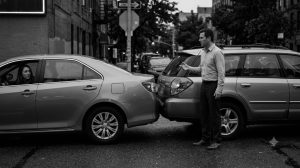
Example: You have $20,000 in medical bills from a bad crash in Mira Mesa.
- Insurance Offer (1.5x): $30,000 for pain + $20,000 bills = $50,000 Total.
2. The Per Diem (Daily Rate) Method
This approach assigns a daily dollar value to your suffering—often equivalent to your daily earnings—for every day you are in pain.
- Example: You earn $250/day. You were in pain for 180 days while recovering.
- Calculation: $250 x 180 days = $45,000 in pain and suffering.
“Bystander” Claims: Watching a Loved One Get Hurt
There is a special category of emotional distress called Negligent Infliction of Emotional Distress (NIED). In San Diego, you can sue for emotional distress even if you weren’t physically hit, but only if you meet the strict “Bystander” criteria (California Jury Instruction 1621):
- You were closely related to the victim (parent, spouse, child).
- You were present at the scene when the injury occurred.
- You were aware that the injury was happening at that moment.
- You suffered serious emotional distress as a result.
- Scenario: A mother walking in Little Italy sees a car strike her child in the crosswalk. She is not hit, but she suffers severe trauma from witnessing it. She can sue the driver for her own emotional distress.
Proving the Invisible in 2026
In 2026, insurance companies use advanced AI software to minimize these claims. They will argue that because you didn’t see a therapist, you aren’t really distressed.
How We Fight Back:
- The “Pain Journal”: We ask clients to keep a daily log. “Oct 12: Could not sleep because of back spasms.” “Oct 14: Missed son’s soccer game because I couldn’t drive.” This diary is admissible evidence in court.
- Witness Testimony: We interview your coworkers and family. A spouse saying, “He used to be happy, however since the collisions now he is withdrawn and angry,” can be very powerful testimony.
- Therapy Records: Even a few sessions with a counselor to discuss accident-related PTSD can validate your claim significantly.
San Diego Juries: A Reality Check
It is important to know your venue. San Diego juries tend to be more conservative than those in Los Angeles or San Francisco. They are often skeptical of “whiplash” claims. This is why Tan Ngo Law Firm prepares every case as if it is going to trial. When the insurance company sees we have the medical experts, the psychological evaluations, and the witness statements ready, they are much more likely to settle for the full value before we ever step into a courtroom.